
You’re about to spend money on your house before listing it. The question isn’t whether to invest in improvements. The question is where to put your dollars so you get them back at closing.
After 30 years selling homes in Las Vegas, I’ve watched homeowners pour thousands into projects that buyers don’t care about. I’ve also seen modest updates add tens of thousands to a sale price. The difference comes down to understanding what buyers actually pay for versus what sellers assume they want.
Here’s what the numbers say about renovation ROI, and how to apply it to your Las Vegas home.
The Reality of Renovation Returns
The average home improvement project recoups about 64% of its cost when the home sells. That number comes from national data tracking what buyers actually pay for renovated homes versus comparable unrenovated ones.
Some homeowners hear “64%” and think renovations are a bad investment. That’s the wrong takeaway. Certain projects return far more than average. Others return far less. Your job is knowing which is which before you write any checks.
The projects with the strongest returns share common traits. They address things buyers notice immediately. They solve problems buyers worry about. They make homes feel move-in ready rather than project-heavy.
Projects with weak returns tend to be personal preference items. They might make your life better while you live there, but buyers won’t pay extra for them.
High-ROI Projects Worth Your Money
Steel Entry Door Replacement: 91% Return
Replacing your front entry door with a steel door recoups nearly 91% of its cost at sale. That’s the highest return of any common renovation project.
Why such strong performance? First impressions. Your entry door is the first thing buyers touch when they visit your home. A solid, attractive steel door signals that the home has been maintained. A worn, dated, or damaged door makes buyers wonder what else needs work.
Steel doors also address security concerns, which matter to Las Vegas buyers. They’re more durable than wood in our desert climate. And they’re relatively inexpensive, often under $2,000 installed, which keeps the absolute dollar risk low.
If your front door shows wear, this is one of the safest renovation investments you can make.
Minor Kitchen Remodel: 83% Return
A minor kitchen remodel returns about 83 cents on every dollar spent. That’s significantly better than a major kitchen overhaul.
What counts as “minor”? Refacing or repainting cabinets rather than replacing them. Upgrading countertops. Installing new hardware. Replacing dated appliances with mid-range models. Updating lighting fixtures. Adding a fresh backsplash.
The key word is “refresh” rather than “gut.” You’re making the kitchen feel current without moving walls, relocating plumbing, or installing commercial-grade equipment.
A minor kitchen remodel typically runs $15,000 to $25,000 depending on the size of your kitchen and materials selected. At 83% return, you’re looking at recovering $12,450 to $20,750 of that investment.
Compare that to a major kitchen remodel costing $50,000 or more with only a 62% return. You’d recover roughly $31,000, leaving you $19,000 in the hole. The minor remodel puts you in a much stronger position.
Window Replacement: 72% Return
New windows return about 72% of their cost. In Las Vegas, this project carries extra weight because of our extreme temperatures.
Buyers here understand energy costs. They know that older single-pane windows or failing seals mean higher utility bills. When they see new windows, they’re seeing lower operating costs for years to come.
Wood-frame window replacements tend to perform slightly better than vinyl in terms of ROI, though vinyl costs less upfront. Either option beats leaving old, inefficient windows in place.
If your windows are original to a home built before 2000, or if you notice drafts, condensation between panes, or difficulty opening and closing them, replacement should be on your pre-sale list.
Roofing Replacement: 72% Return
A new roof also returns about 72% of its cost. More importantly, a roof in poor condition can kill deals entirely.
Buyers get nervous about roofs. Home inspectors flag roof issues prominently. Lenders sometimes won’t approve loans on homes with failing roofs. Even cash buyers will demand steep discounts or walk away.
In the Las Vegas market, roofs take serious punishment from sun exposure. A roof that might last 25 years in a milder climate may show significant wear at 15 years here. If your roof is approaching end of life, replacing it before listing removes a major objection and keeps your sale on track.
The cost typically runs $8,000 to $15,000 for an average Las Vegas home, depending on size and materials. At 72% return, you’re recovering $5,760 to $10,800 while eliminating a top buyer concern.
Basement Remodel: 70% Return
Finishing a basement returns about 70% of project costs. For Las Vegas homes with basements (less common here than in other markets), this represents solid value.
Finished basements appeal to buyers because they add functional square footage at a lower cost than building an addition. They’re ideal for media rooms, home offices, guest quarters, or recreation spaces.
The key to strong basement ROI is finishing the space properly. That means adequate ceiling height (aim for at least 7 feet 9 inches finished), good lighting, moisture control, and quality flooring that can handle the below-grade environment.
Bathroom Remodel: 58% Return
Bathroom remodels return about 58% of costs. That’s below average, but bathrooms still matter enormously to buyers.
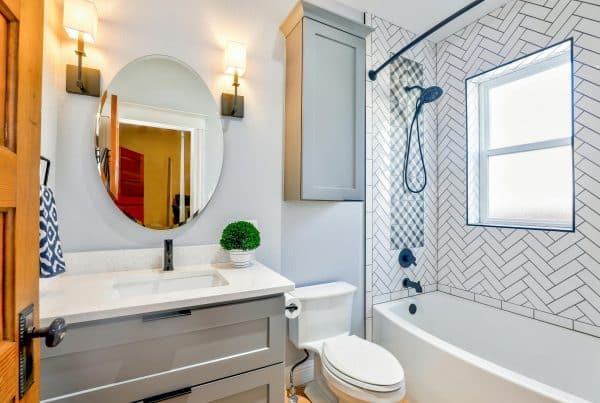
The trick is controlling costs while hitting the updates buyers care about. New vanities with stone tops, improved lighting, modern fixtures, and fresh tile can transform a dated bathroom for $10,000 to $15,000. At 58% return, you’re recovering $5,800 to $8,700.
Where sellers get into trouble is over-improving bathrooms beyond neighborhood standards. A $40,000 spa bathroom in a $400,000 home won’t return its cost. Match your bathroom investment to your home’s price point and neighborhood expectations.
Understanding the Las Vegas Factor
National ROI averages provide useful guidance, but local market conditions affect actual returns. Las Vegas has specific factors that shift renovation priorities.
Climate considerations matter here. Energy efficiency improvements tend to perform better in our market because buyers face real cooling costs six months of the year. New windows, improved insulation, and efficient HVAC systems carry more weight with Las Vegas buyers than they might elsewhere.
Outdoor living space counts. Buyers here expect to use their backyards for much of the year. A covered patio, outdoor cooking area, or well-designed landscaping can boost appeal significantly. Pool maintenance concerns cut both ways, so some buyers see pools as assets while others see liabilities.
Desert landscaping is expected. You don’t need to install a lawn to sell a home here. In fact, water-efficient landscaping often appeals more to buyers who understand the ongoing costs and effort of maintaining grass in this climate.
HOA restrictions shape possibilities. Many Las Vegas communities have strict guidelines about exterior modifications, paint colors, and landscaping. Check your HOA rules before planning any exterior improvements.
Where Sellers Waste Money
Some popular renovation projects consistently underperform. Knowing where not to spend protects your budget for improvements that actually pay off.
Major kitchen remodels return only 62% of costs. The gap between minor (83%) and major (62%) kitchen work is substantial. Unless your kitchen is completely non-functional or dramatically below neighborhood standards, the minor approach wins financially.
Home office remodels return poorly because home office needs vary dramatically between buyers. What works perfectly for your remote work setup may not suit the next owner at all. Keep home office improvements minimal and reversible.
Sunroom additions recoup less than half their cost in most markets. They’re expensive to build, expensive to heat and cool, and don’t add usable square footage that appraisers value highly.
Swimming pool additions in cold-weather states are terrible investments. Las Vegas is different since pools are common and expected in certain neighborhoods, but adding a pool still rarely returns its full cost. If you’re adding a pool purely for resale value, reconsider.
Over-customized spaces that reflect personal taste rather than broad appeal hurt more than help. Bold paint colors, built-in specialty features, and unique finishes may need to be removed or neutralized before selling.
How to Prioritize Your Pre-Sale Budget
Most sellers have limited budgets for pre-sale improvements. Here’s how to allocate dollars for maximum impact.
Start with repairs, not upgrades. Fixing problems returns better than adding features. A leaky roof, faulty electrical, foundation cracks, or aging HVAC systems will cost you at negotiation time. Address these first.
Focus on first impressions. Entry door, exterior paint, landscaping, and front approach set buyer expectations before they walk inside. These areas punch above their weight in terms of buyer perception.
Update kitchens and bathrooms strategically. These rooms drive buyer decisions, but costs can spiral quickly. Set a firm budget based on your home’s value and neighborhood. Stick to it.
Don’t chase perfection. Your goal is making the home appealing to the widest range of buyers, not creating your dream home. Good enough often outperforms over-improved when the numbers are tallied.
Get contractor quotes before committing. Renovation costs vary significantly between contractors. Get multiple bids, check references, and factor in timeline. A project that drags on for months can cost you in carrying costs and market timing.
The Math That Matters
Here’s a practical framework for evaluating any renovation investment.
Take your expected project cost. Multiply by the typical ROI percentage for that project type. That’s your expected recovery at sale.
Subtract the recovery from the cost. That’s your net out-of-pocket after selling.
Now ask yourself: Is enjoying this improvement for the time between now and sale worth that net cost? If yes, proceed. If you’re doing the project purely for resale value and the math doesn’t work, reconsider.
A $15,000 minor kitchen remodel at 83% return means $12,450 recovery and $2,550 net cost. If you’ll enjoy that kitchen for a year before selling, $2,550 for 12 months of a nicer kitchen might feel worthwhile.
A $50,000 major kitchen remodel at 62% return means $31,000 recovery and $19,000 net cost. That’s a much harder pill to swallow unless you genuinely need the upgraded space for your remaining time in the home.
Frequently Asked Questions
What home improvement has the highest ROI?
Steel entry door replacement returns approximately 91% of costs, making it the highest-ROI renovation project tracked in national cost-versus-value studies. The combination of low absolute cost and strong buyer impact drives this performance.
Is a kitchen remodel worth it before selling?
A minor kitchen remodel returns about 83% of costs and is typically worth the investment if your kitchen looks dated. Major kitchen remodels return only 62%, so controlling scope and budget matters. Focus on cabinet refinishing, countertop upgrades, new hardware, and updated lighting rather than gut renovations.
Do bathroom remodels add value to a home?
Bathroom remodels return approximately 58% of costs at sale. While below average, updated bathrooms strongly influence buyer decisions. Keep budgets reasonable and match improvements to your home’s price point. A new vanity with stone top, improved lighting, and modern fixtures can transform the space without overspending.
What renovations are not worth doing before selling?
Home office remodels, sunroom additions, and over-customized spaces typically return poorly. Major kitchen overhauls also underperform compared to minor updates. Any renovation that reflects personal taste rather than broad buyer appeal carries risk.
How much should I spend on renovations before selling?
A common guideline is spending no more than 5-10% of your home’s value on pre-sale improvements. Focus that budget on repairs first, then high-ROI projects like entry doors, minor kitchen updates, and bathroom refreshes. Get multiple contractor quotes and set firm budgets before starting.
Does replacing windows increase home value?
Window replacement returns about 72% of costs. In markets with extreme temperatures like Las Vegas, energy efficiency improvements carry extra buyer appeal. New windows signal lower utility costs, which today’s buyers factor into their purchase decisions.
Should I replace my roof before selling?
If your roof is failing or near end of life, replacement typically makes sense. New roofing returns about 72% of costs, but more importantly, roof problems scare buyers, complicate inspections, and can derail financing. Removing this concern keeps your sale on track.
What adds the most value to a house?
The highest-value improvements address what buyers immediately notice and worry about: entry appeal, kitchen condition, bathroom function, and major systems like roofing and HVAC. Repairs consistently outperform cosmetic upgrades in terms of protecting sale price.
How do I decide which renovations to prioritize?
Start with necessary repairs. Then address first-impression areas like entry and curb appeal. Next, update kitchens and bathrooms within budget. Finally, consider any remaining high-ROI projects that fit your timeline and budget. Skip anything that reflects personal taste rather than broad appeal.
Do Las Vegas homes need different improvements than other markets?
Las Vegas buyers prioritize energy efficiency due to cooling costs, value outdoor living space, and expect desert-appropriate landscaping. HOA restrictions are common and shape what improvements are possible. Pool expectations vary by neighborhood. These factors should influence your renovation priorities.
Key Takeaways
- Steel entry door replacement offers the highest ROI at 91% and improves first impressions immediately
- Minor kitchen remodels (83% return) dramatically outperform major overhauls (62% return)
- Window and roof replacement both return 72% while addressing top buyer concerns
- Bathroom remodels return 58% but strongly influence buyer decisions when done appropriately
- Repairs should be prioritized over upgrades since fixing problems protects value better than adding features
- Las Vegas climate makes energy efficiency improvements more valuable to local buyers
- Set firm budgets based on your home’s value and neighborhood standards before starting any project